

Our esteemed President enables the widespread introduction of new technologies into the country's horse breeding, the high-level organization of races, equestrian and marathon competitions, national horse games, and the scientific analysis of the results of grooming activities.
As is known, the speed of a galloping horse is related to the movements of its legs. In this case, the horse's own weight falls vertically on its legs from top to bottom. If a galloping horse's leg movements at low or high speed are not synchronized with the speed, the load on the bones of all four legs is uneven. In this case, the front legs of the horse help to lift the whole body, slightly reduce the weight on all four legs and throw the body forward. The weight falling on the front legs causes horses to limp.
Leg pain in horses often occurs when they are injured or sick. Leg diseases will be acute and chronic. Acute leg diseases are characterized by severe pain and high fever. Chronic leg diseases often have milder symptoms than those listed above, but they can be difficult to diagnose.
Atrophy of the shoulder muscles of horses. Thinning and shrinkage (atrophy) of the shoulder muscles of horses is caused by tearing and damage to their nerves. Injuries to the muscles of the anterior scapula in horses result in rupture of nerve fibers and damage to the muscles attached to the scapula. In this case, it is difficult for veterinarians to diagnose and identify clinical signs of damage to the nerves of the scapula of an injured horse. In these cases, veterinarians watch the horse walk forward and observe the shoulder joints of the horse's legs.
In addition, doctors observe the shortening of the steps of a walking horse and, based on this, note the injured leg. Over time, pay attention to the thickness of muscles that are injured and less mobile. Horses that have not been cared for for a long period of time have difficulty walking, meaning that a sudden backward movement of the horse's front leg can cause damage to the tendons of the nerves of the scapular muscles. As a result, stretching or rupture of the tendons of the leg leads to disruption of blood circulation in its tissues, death of vascular fibers (necrosis).
Inflammation (bursitis) of the humerus joint of a horse's leg. This disease occurs in the connecting joints of the horse's humerus and scapula. The sac-like space within a bone joint is called a bursa, and these spaces contain fluid (synovial fluid) that helps the bones of the joint move. For various reasons, these joints get cold, causing the horse to be limping. Horses usually become lame when the disease is acute, but long-term bursitis does not cause lameness in horses. Symptoms of this disease are often seen in horses carrying heavy loads.
Scapular fractures in horses. Scapular fractures are extremely rare in horses because the bone is located between the flattest and strongest muscles in the body. Horses that stumble and fall on hard ground can cause this bone fractures. In this condition, horses are unable to put pressure on the injured leg. In this case, it is very difficult for veterinarians to treat horses.
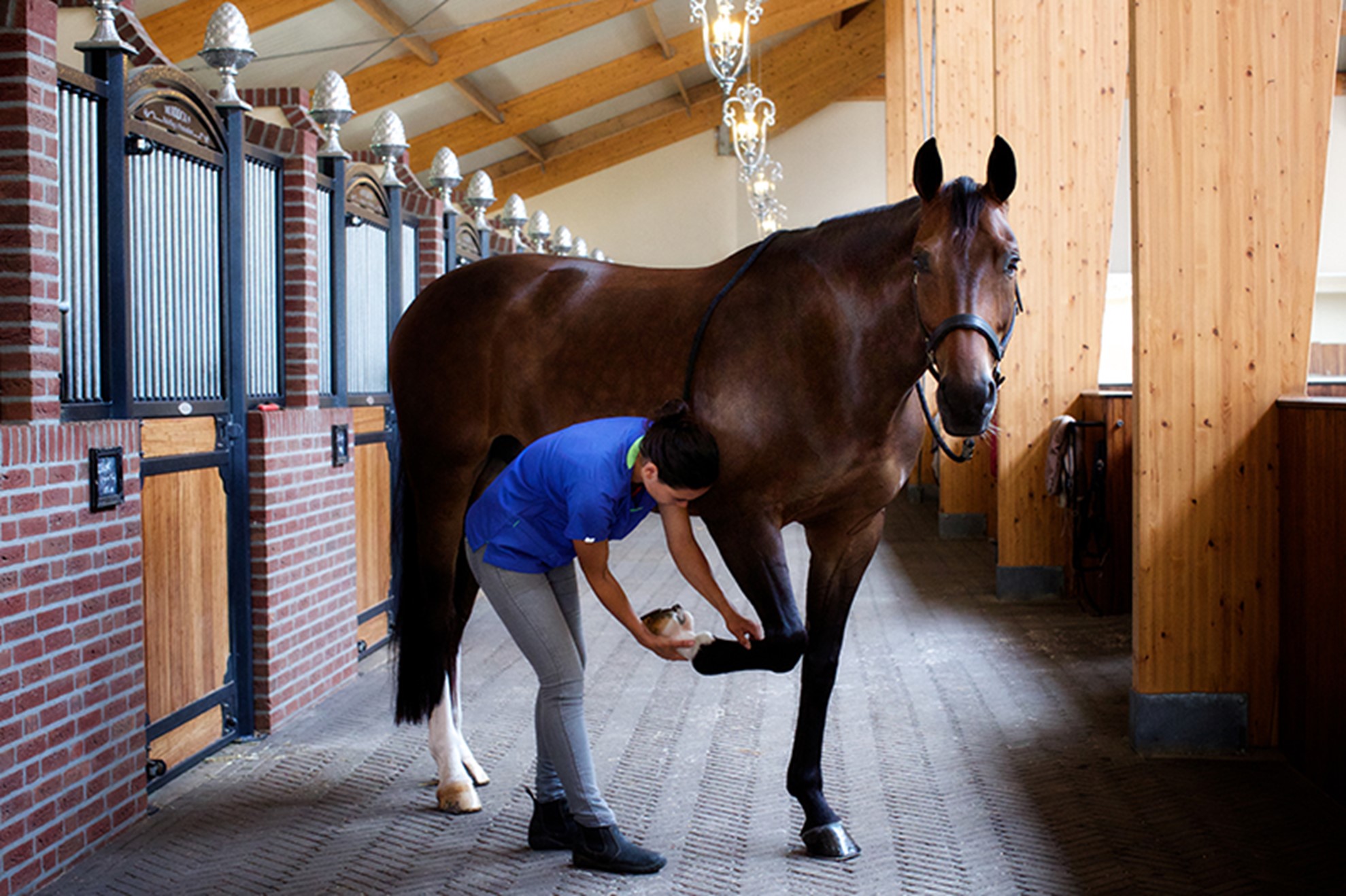
In general, horse leg injuries are associated with the condition of the leg joints, body muscles and nerves, and cause a decrease in the ability to function of all their internal and external systems. Therefore, it is important for veterinarians and horse breeders to pay close attention to the conditions created against these diseases and the safety of horses in Equestrian Complex and private farms.
Begenchdurdy Mulkiyev
Head of the Vivarium Department
Horse Breeding Research Center
of the State Association
"Turkmen Atlary"